
Blog Nov 16, 2026
Low-Impact Kickboxing Workout at Home for Beginners
Kickboxing burns serious calories and builds real skill — but the jumping, hopping and bouncing in most follow-along classes is brutal on beginner knees and impossible in an apartment. A low-impact kickboxing workout at home removes the impact and keeps the training: the same strikes, the same footwork, the same rounds, with one foot on the floor at all times. This guide gives you the five rules, a complete 20-minute session with exact rounds and rests, technique notes for the four core moves, and a weekly plan built to be repeated for months.
Quick Answer
- Yes — low-impact kickboxing works. The conditioning comes from rounds of striking and footwork, not from jumping; removing jumps keeps most of the training effect with far less joint stress.
- The core rule: one foot stays on the floor at all times. Step into kicks instead of hopping, step forward and back instead of bouncing, and set every kick down under control.
- The session: a 5-minute warm-up, then 6 rounds of 2 minutes with 1 minute rest — jab-cross steps, hooks, step-in front kicks, knee lifts and low roundhouse kicks.
- It suits beginners, adults over 40, anyone with unhappy knees, and anyone training in an apartment — and it builds cleaner technique because slow reps expose sloppy form.
- Progress by adding a round or a combination each week — never by adding jumps first.

Why a Low-Impact Kickboxing Workout at Home Works
Most of what makes kickboxing effective has nothing to do with jumping. The calorie burn and the conditioning come from large muscle groups working in combination — legs driving, hips rotating, core bracing, arms striking — repeated in rounds. The impact in a typical class comes from a short list of optional extras: jump squats, burpees, jumping switch kicks, high knees run on the spot. Remove those, keep the striking and the footwork, and you keep roughly all of the training effect with a fraction of the joint stress. What you also remove is the noise: a low-impact kickboxing workout at home can be done in an apartment, early in the morning, without the downstairs neighbour learning your schedule.
There is a second, quieter benefit for beginners. Impact hides sloppy technique — when you are bouncing and rushing, nobody can see that your cross has no hip rotation. Slow the session down and every rep becomes visible: the pivot of the rear foot, the hand returning to the cheek, the knee tracking straight. Low impact is not the easy version of kickboxing. Done properly, it is the honest version, and it is where clean technique is actually built. Our shadowboxing workout for beginners at home uses the same no-equipment approach if you want a second session to rotate with this one.
The 5 Rules of Low-Impact Training
- One foot stays on the floor. If a move asks both feet to leave the ground — jumps, hops, bouncing switches — replace it with a step. Step into the kick instead of jumping into it; step forward and back instead of lunging with a leap.
- Speed comes from your hands, not your feet. Conditioning rises when combinations flow without pauses. Punch faster and cleaner before you ever move your feet faster.
- Shorten the stance when your knees complain. A slightly shorter, narrower stance reduces knee and ankle stress on pivots. Power returns as the joints adapt.
- Land every kick softly — by stepping down, not dropping. After a kick, place the foot back on the floor under control. The step-down is part of the technique, not the rest between techniques.
- Talk-test your rounds. You should be able to speak in short sentences during work rounds. If you cannot get three words out, slow the combinations down — do not add impact to feel "harder".
The 20-Minute Low-Impact Kickboxing Workout
Warm up first — never skip this. Five minutes: march in place with arm swings (1 minute), step-touch side to side (1 minute), easy shadow jab-cross at half speed (1 minute), hip circles and knee lifts without jumping (1 minute), then slow front kicks to knee height, alternating legs (1 minute). The full routine in our kickboxing warm-up routine for beginners covers the same ground in more detail. Then work through the rounds below. Rest is built in — use it to breathe and reset your stance, not to sit down.
| Round | Work | Combination / drill | Rest |
|---|---|---|---|
| 1 | 2 min | Jab – cross, step forward and back between each pair | 1 min |
| 2 | 2 min | Jab – cross – lead hook, hands back to cheeks every rep | 1 min |
| 3 | 2 min | Step-in front kick (knee height) – jab – cross, alternate legs | 1 min |
| 4 | 2 min | Jab – cross – rear knee lift (no jump, drive the knee up and step down) | 1 min |
| 5 | 2 min | Low roundhouse to thigh height – cross, alternate sides each minute | 1 min |
| 6 | 2 min | Freestyle: any two combinations above, slowest clean speed you can hold | — |
Total: 17 minutes of rounds plus transitions lands you at about 20 minutes with the warm-up counted separately. Too easy after two weeks? Add a seventh round before you add anything else — volume first, always. Too hard today? Cut rounds 4 and 5 and repeat round 1 instead. The session bends; it does not break.

Technique Notes for the Four Core Moves
Step-in front kick
Step the rear foot forward a half-step, lift the front knee to hip height, extend the lower leg in a straight line, then reverse the motion and step down under control. The low-impact version removes the hop that many classes add before the kick — your supporting foot never leaves the floor until the kicking foot returns. Keep the target at knee-to-belt height for the first month; height is the last variable you earn.
Jab – cross with a step
Step forward six inches as the jab lands, let the cross rotate the rear hip and shoulder through, then step back to your stance. The step replaces the bounce. If your front knee aches, halve the step and slow down — range is adjustable, rhythm is not.
Rear knee lift
Drive the rear knee up toward your chest while pulling your hands down to meet it, then place the foot back in stance. No jump, no lean-back. This is the low-impact ancestor of the jumping knee strike — same hip mechanics, zero landing. Our beginner kickboxing footwork drills show how these steps chain together once the basics feel automatic.
Low roundhouse
Pivot the standing foot about 45 degrees, swing the rear leg in an arc to thigh height, strike with the shin, and return along the same path. Thigh height is not a limitation — in Muay Thai the low kick is a fight-ending weapon precisely because it is fast and repeatable. Control the return: a kick you cannot retract cleanly was too fast.
A Beginner Week Built Around Low-Impact Sessions
| Day | Session | Notes |
|---|---|---|
| Monday | This workout, 6 rounds | Technique focus: slow round 6 down until it is clean |
| Tuesday | Walk 20–30 minutes + 5 minutes mobility | Active recovery, not a second workout |
| Wednesday | Strength: squats to a chair, wall push-ups, glute bridges, dead bugs | 2–3 sets of 8–12, everything joint-friendly |
| Thursday | Rest or easy walk | Full recovery day |
| Friday | This workout, 6–7 rounds | Add the extra round only if Monday felt controlled |
| Weekend | One optional light session or a hobby | Bonus, never a debt |
Two kickboxing sessions and one strength session is a complete beginner week. Progress it the way all sustainable programs progress: one small change per week — an extra round, a new combination, or ten percent more strength work — never all three at once.
4 Low-Impact Mistakes That Quietly Ruin the Session
- Going slow and calling it low-impact. Low impact describes what your joints absorb, not how hard your heart works. Rounds should still leave you breathing hard — through combination density, not jumping.
- Dropping the footwork. Standing flat-footed and arm-punching removes the legs from the workout. The steps in and out are where the conditioning lives.
- Kicking high before the hip is ready. Height chased too early becomes a leaned-back, off-balance kick that stresses the standing knee. Thigh height, clean, beats head height, sloppy.
- Skipping the warm-up because "it's only low impact". Cold joints are exactly the joints low-impact training is meant to protect. The five minutes are non-negotiable.
Want Kickboxing Training Your Joints Can Actually Keep Up With?
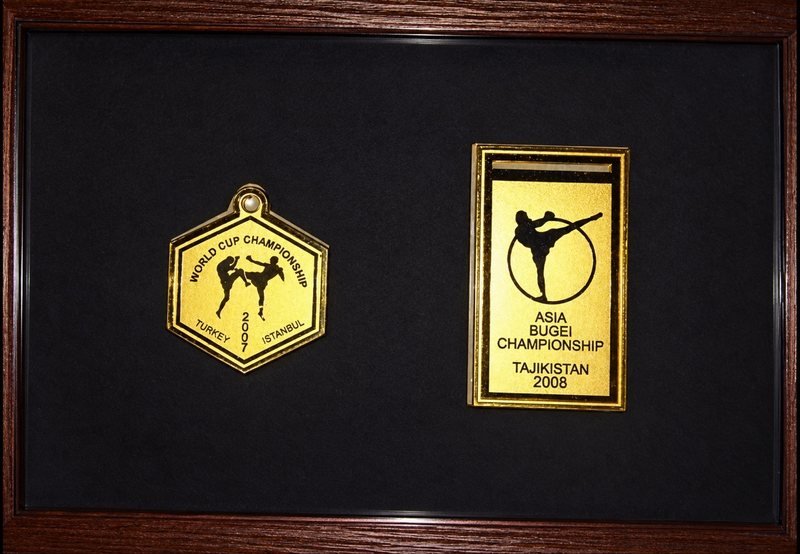
FitnessBlackBelt online coaching builds kickboxing and strength sessions around your body — your knees, your schedule, your floor situation — with progressions that add rounds and skill before they ever add impact. It is led by Mah Ghasemi, ISSA-certified coach, 2007 kickboxing world champion and 2011 MMA world champion. Start with the free 7-day trial and train the way that lasts.
- Personalised kickboxing and strength programming, joint-friendly by design
- Video form checks on every core strike, so low impact never means low quality
- Weekly check-ins that adjust the plan to your recovery and your life
Explore coaching programs and start your first week free.
FAQ
Does low-impact kickboxing still burn calories?
Yes. Calorie burn in kickboxing comes mainly from large muscle groups working continuously in rounds — legs, hips, core and arms together. Jumping adds some extra cost, but it is a small part of the total. A well-paced 20-minute low-impact session with short rests is still vigorous exercise for most beginners.
Is low-impact kickboxing good for bad knees?
It is far kinder than standard classes because nothing lands from height and pivots can be shortened. Many people with grumpy knees tolerate it well. That said, knee pain has many causes — if you have sharp pain, swelling or instability, get assessed before starting any kicking program.
Can I do this workout in an apartment?
Yes — that is one of its main purposes. With no jumping and soft step-downs, impact noise is minimal. Train in socks or soft shoes on a mat if you have one, and keep kicks at thigh height while you learn control.
How often should beginners do low-impact kickboxing?
Two sessions per week is a strong start, paired with one simple strength session and real rest days. After 3–4 consistent weeks, a third shorter session can be added if recovery and joints feel good.
When should I progress to regular kickboxing?
When the low-impact version feels controlled for full rounds — clean pivots, hands returning to guard, no joint complaints the next day — you can gradually add standard elements like a bouncing stance or a heavier bag session. There is no deadline; many people train low-impact permanently and keep progressing.
Sources
- U.S. Department of Health and Human Services (2018). Physical Activity Guidelines for Americans, 2nd edition.
- Ainsworth B.E. et al. (2011). 2011 Compendium of Physical Activities: a second update of codes and MET values. Medicine & Science in Sports & Exercise, 43(8), 1575–1581.
- Garber C.E. et al. (2011). American College of Sports Medicine position stand: Quantity and quality of exercise for developing and maintaining fitness in apparently healthy adults. Medicine & Science in Sports & Exercise, 43(7), 1334–1359.