
Blog Nov 17, 2026
How Long Should a Beginner Workout Be? A Coach's Answer
Ask ten sources how long a workout should be and you will get answers from 15 minutes to two hours — usually with no explanation of what fills the minutes. So here is the coach's version: how long should a beginner workout be, in exact minutes, broken down by workout type, with the minute-by-minute anatomy of a 30-, 45- and 60-minute session, the signs yours is too long or too short, and the busy-day rule that protects your streak when life gets in the way.
Quick Answer
- For most beginners: 30–45 minutes of focused training, 3 times a week. That is enough to train every major muscle group with hard, progressive sets — and short enough to repeat for months.
- By type: full-body strength 30–45 minutes; upper/lower sessions 40–60; kickboxing at home 20–30; walking and steady cardio 20–45; mobility 10–15.
- The clock does not build muscle — weekly hard sets per muscle group, done with good form and progressed over time, do. Length is just how those sets fit into your day.
- A session is too long when form collapses, performance drops set to set, or you start dreading and skipping workouts. It is too short when you finish feeling like you warmed up.
- Busy-day rule: shrink the session to 15 minutes of the main lifts — never skip it entirely. The streak matters more than any single session.

The Short Answer — and the Better Question Behind It
Thirty to forty-five minutes, three times a week. That is the answer for a beginner doing full-body strength training at home or in a gym, and it is not a guess: it is what you get when you add up the work a beginner's body can actually use. A full-body session of five exercises, two to three sets each, with honest rest periods, lands at 30–45 minutes almost every time. Research on time-efficient training (Iversen and colleagues, 2021) makes the same point from the other direction: beginners gain strength and muscle from a modest weekly dose — a handful of hard sets per muscle group, in the 6–15 rep range — and piling extra exercises into one marathon session adds fatigue, not extra progress.
So replace the question "how long should my workout be?" with "how many hard sets does each muscle need this week, and how do they fit my schedule?" For a beginner, roughly 6–10 hard sets per major muscle group per week is a productive target, spread over two or three sessions. If those sets take you 30 minutes, your workout is 30 minutes. If you train fewer days and pack them into two longer sessions, 50–60 minutes is fine. What never works is the opposite logic — filling 90 minutes because the clock says a "real" workout is long, then quitting in week three because every session feels like a second job.
How Long Should a Workout Be? Minute Budgets by Type
Different training spends minutes differently. Strength work spends them on rest between hard sets; conditioning spends them on continuous effort; mobility spends them on slow positions. Use the budget that matches the session in front of you:
| Workout type | Beginner length | What fills the minutes |
|---|---|---|
| Full-body strength (dumbbells or bodyweight) | 30–45 min | 5 min warm-up, 5 exercises × 2–3 sets, 60–90 sec rests |
| Upper-body or lower-body day | 40–60 min | More exercises per muscle group (5–6), 3 sets each |
| Kickboxing / shadowboxing at home | 20–30 min | 6–8 rounds of 2 min with 1 min rest, plus a short warm-up |
| Walking and steady cardio | 20–45 min | Continuous moderate effort; counts toward the 150 weekly minutes in the guidelines |
| HIIT / conditioning circuits | 15–25 min | Short work intervals; quality collapses fast, so sessions stay short |
| Mobility and stretching | 10–15 min | Slow positions, 30–60 sec each — ideal on rest days |
Two notes on the table. First, warm-up time is inside these numbers — a beginner who skips the warm-up to "save time" is borrowing minutes from their joints. Second, these are training minutes, not door-to-door minutes: if you drive to a gym, your 40-minute session is a 70-minute appointment, which is exactly why so many of my online clients train at home with sessions like our 20-minute beginner kickboxing workout at home.

Inside a Perfect 30-, 45- and 60-Minute Session
The 30-minute session (your default). Minutes 0–5: warm-up — marching, arm circles, bodyweight squats and hinges. Minutes 5–25: four main exercises, 2–3 sets each, paired to save time (squat paired with row, press paired with Romanian deadlift), resting 60–90 seconds between pairs. Minutes 25–30: one core exercise and a slow-breathing cool-down. You finish having trained everything, with two hard sets per pattern.
The 45-minute session (add sets, not exercises). Same skeleton, with a third set on the main lifts and one accessory added — curls, calf raises or a carry. This is the right upgrade after four to six weeks, when two sets no longer feel like enough work. Notice what did not change: the exercise list barely grew. Volume grew.
The 60-minute session (two-muscle-group days). Once you split training into upper and lower days, each muscle group gets more exercises, and the clock follows: 5-minute warm-up, five to six exercises at 3 sets each, 90-second rests on the big lifts. Sixty minutes is a ceiling for beginners, not a target — past it, the extra sets are usually performed so tired that they teach sloppy patterns.
6 Signs Your Workout Is Too Long — or Too Short
| Sign | Meaning | The fix |
|---|---|---|
| Reps drop sharply from set 1 to set 3 at the same weight | Too much fatigue packed into one session | Cut one exercise; keep rests at 90 seconds on main lifts |
| Form visibly breaks down in the last third of the session | The session outlasted your technique | End the session at the last exercise you can perform cleanly |
| You dread sessions and start skipping them | Length is killing consistency — the costliest problem of all | Drop to 30 minutes for two weeks and rebuild the streak |
| Soreness regularly lasts more than 72 hours | Too much volume for your current recovery | Remove 2–4 weekly sets before you remove days |
| You finish every session feeling like you only warmed up | Too short or too easy | Add a set to the main lifts, or slow the lowering phase to 3 seconds |
| Nothing has progressed in 4 weeks — same weights, same reps | Not a length problem: a progression problem | Track your sessions and add reps before adding minutes |
How Workout Length Should Grow Over Your First 12 Weeks
Weeks 1–2: 20–30 minutes. Two sets per exercise, generous rests, and one job: learn the movements. Mild soreness is expected; exhaustion is a programming error. Weeks 3–6: 30–40 minutes. Add the third set to your main lifts. This is where most beginners should live for a while — it pairs naturally with training three days a week, which our guide to how many days a week beginners should work out maps out. Weeks 7–12: 40–55 minutes. Add one accessory exercise or a fourth set on a lift you want to prioritise. After 12 weeks: length grows only when a goal demands it — a fourth weekly day usually beats a longer session, because fresh muscles do better work than tired ones. The pattern to notice: across 12 weeks you added perhaps 20 minutes, and almost all of it was extra sets of exercises you already knew. Beginners who jump straight to 75-minute sessions skip the adaptation that makes longer sessions useful.
The Busy-Day Rule: Shrink the Session, Never Skip It
Your plan will meet a week with a sick child, a deadline and no sleep. On those days, run the 15-minute minimum session: warm up for 2 minutes, then 2 sets each of a squat pattern, a press and a row — the three movements that cover the most muscle — with short rests, and stop. You will not set records. You will keep the habit, the weekly set count respectable, and the identity of "someone who trains" intact, which is the asset everything else is built on. Plan these weeks in advance using the structure in our guide to planning your first training week: put the shortest session on your busiest day before the week starts, not as an apology after it ends. And remember the weekly view from the Physical Activity Guidelines for Americans: 150 minutes of moderate activity plus two muscle-strengthening days is the health baseline — three 40-minute strength sessions and two 20-minute walks already clear it. You are probably closer than you think.
Want Your Week Planned to the Minute?
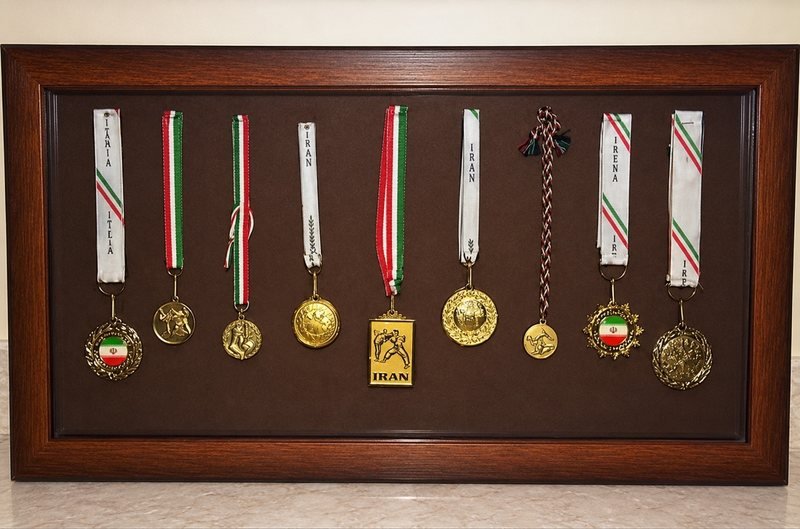
FitnessBlackBelt online coaching builds your training week around the time you actually have — 20-minute days and 45-minute days in the same program — with progression, form checks and weekly adjustments handled for you. It is led by Mah Ghasemi, ISSA-certified coach, 2007 kickboxing world champion and 2011 MMA world champion. Start with the free 7-day trial and get a week sized to your real life.
- Sessions matched to your schedule — no 90-minute plans for 30-minute days
- Exact sets, reps and progressions, reviewed weekly by your coach
- Strength, kickboxing and recovery balanced across your week
Explore coaching programs and start free with a plan that fits your clock.
FAQ
Is a 20-minute workout enough for a beginner?
Yes, especially in the first weeks. Twenty focused minutes — a short warm-up plus two hard sets each of a squat, a press, a row and a hinge — is a genuine training stimulus for a beginner, whose body responds to almost any progressive work. Three 20-minute sessions a week will build real strength and habit. Add time later by adding sets, not by adding exercises.
Is a 90-minute workout too long for a beginner?
Almost always, yes. Beginners cannot do enough quality work to fill 90 minutes: after 45–60 minutes, fatigue degrades form, performance drops set to set, and the extra volume mostly becomes soreness that endangers the next session. Longer sessions also get skipped more, and consistency is worth more than any single workout. Experienced lifters with specific goals are a different case.
How long should a beginner rest between sets?
About 60–90 seconds for most exercises, and up to 2 minutes after your heaviest lift of the day if you need it to repeat your reps with clean form. Rest is part of the workout's length, and cutting it too short is the most common way beginners accidentally turn strength training into sloppy conditioning. If you are fully recovered in 30 seconds, the weight is probably too light.
Should beginners work out every day if sessions are short?
No. Short sessions still create fatigue that muscles need 48 hours to recover from, which is why three full-body days a week is the standard beginner structure. On the other days, walking and mobility work are excellent — they help recovery instead of competing with it. Daily hard training is the fastest route to the soreness-and-stalled-progress trap.
Does workout length matter for fat loss?
Less than total weekly activity and food intake. Fat loss responds to your overall energy balance across weeks, not to whether Tuesday's session was 35 or 55 minutes. Longer sessions do burn somewhat more energy, but the effect is modest compared with daily steps and nutrition. Choose the length you can sustain — a sustainable plan is the one that is still running in month six, when fat loss actually shows.
Sources
- Iversen, V.M. et al. No Time to Lift? Designing Time-Efficient Training Programs for Strength and Hypertrophy. Sports Medicine, 2021.
- Physical Activity Guidelines for Americans, 2nd edition — 150–300 minutes of moderate aerobic activity weekly plus muscle-strengthening on 2 or more days.
- American College of Sports Medicine. Progression Models in Resistance Training for Healthy Adults — position stand. Medicine & Science in Sports & Exercise, 2009.