
Blog Nov 17, 2026
Dumbbell Back Workout at Home: 6 Exercises That Work
Most home programs quietly skip the back. Push-ups, presses and squats are easy to program, so they get programmed — while the muscles that hold your posture upright, protect your shoulders and power every punch get nothing. The fix is one focused session a week. This dumbbell back workout at home uses six exercises, a chair and floor space, takes about 35 minutes, and comes with the exact sets, reps, tempo and rest periods — plus the form fixes and fixed-pair progressions the listicles leave out.
Quick Answer
- Do this session once a week (twice if it is your only pulling work): one-arm row, bent-over row, Romanian deadlift, floor pullover, reverse fly and shrug — in that order, rows first while your lower back is fresh.
- The full workout is 14 working sets and takes about 35 minutes: rows 3 sets of 8–12 per side, hinge 3 sets of 8–10, accessories 2 sets of 12–15, resting 60–90 seconds between sets.
- Your elbow path decides what you train: elbows tucked to your hip build lats; elbows flared to 45–60° build upper back and rear shoulders. Pick on purpose, not by accident.
- With one fixed pair of dumbbells, progress by adding reps, then a 3-second lowering phase, then a pause — before you spend money on heavier weights.
- Stop any set where your lower back rounds or takes over. A tired lower back is the session's real limit, not your lats.

Why Home Training Skips Your Back — and Why That Costs You
Pressing is visible — you can watch your chest and arms work in a mirror — so home programs fill up with presses, push-ups and curls. Your back (lats, rhomboids, trapezius, rear delts, spinal erectors) works out of sight, and gets skipped. The bill arrives in three places. Posture: strong pressing with weak pulling rounds the shoulders into the desk-worker hunch. Shoulder health: the upper back and rear delts keep the shoulder seated and decelerate the arm. Power: in striking, retracting the hand fast, rotating the trunk and holding a guard up in the late rounds are all back work.
You do not need cables or a pull-up bar to fix this. You need one deliberate pulling session a week, in the right order: supported rows first, while your lower back is fresh, and the fatiguing hinge work after the rows.
The 6 Exercises in This Dumbbell Back Workout at Home
1. One-Arm Dumbbell Row (chair-supported)
Setup: Put your left hand flat on a sturdy chair seat, feet staggered, torso close to parallel with the floor, one dumbbell in your right hand hanging below your shoulder. The rep: pull the dumbbell to your hip — elbow skimming your ribs — over 1 second, pause 1 second, lower over 3 seconds until your arm is straight and your shoulder blade reaches forward. Tempo: 3-1-1. The common error: rotating your whole torso to heave the weight up, which turns a lat exercise into a wrestling move. The fix: imagine your chest stays pointed at the floor for the entire set; if you cannot, the dumbbell is too heavy. Regression: free hand on a counter at hip height. Progression: a 2-second top pause.
2. Bent-Over Two-Dumbbell Row
Setup: hinge at the hips with soft knees, flat back, one dumbbell in each hand, palms facing each other. The rep: row both dumbbells toward your lower ribs with elbows flaring to about 45–60°, squeeze your shoulder blades together for 1 second, lower over 2–3 seconds. Tempo: 3-1-1. The common error: standing up as you pull — each rep becomes a small deadlift and the upper back never works hard. The fix: pick a spot on the floor 1 metre ahead and keep your eyes and chest angle fixed on it; your torso angle should look identical on rep 1 and rep 10. Regression: seated on a chair edge, chest near thighs. Progression: one underhand-grip set for more lats and biceps.

3. Dumbbell Romanian Deadlift
Setup: stand tall holding both dumbbells against the front of your thighs. The rep: push your hips back — not down — keeping the dumbbells sliding down your legs, knees soft, back flat, until your hips stop travelling (usually just below the knees); stand by driving your hips forward. Tempo: 3 seconds down, 1 second up. The common error: reaching for the floor with your hands, which rounds the lower back. The fix: think hips-back, not hands-down; the dumbbells stop where your hips stop. Read our dumbbell deadlift form mistakes guide before adding weight here. Regression: practise the hinge with no weight, hands sliding down your thighs. Progression: single-leg Romanian deadlift, one dumbbell, hand on a wall for balance.
4. Floor Pullover
Setup: lie on the floor, knees bent, holding one dumbbell by one end with both hands above your chest. The rep: lower it back over your head over 3 seconds until your upper arms near the floor, elbows softly bent, ribs down; pull it back by squeezing your lats — elbows drive the weight, not hands. Tempo: 3-0-2. The common error: flaring the ribs and arching your lower back, dumping the work into your spine. The fix: exhale as you lower, lower back pressed gently into the floor; shorten the range until you can. Regression: half-range, stopping at 45°. Progression: 4-second lowering.
5. Bent-Over Reverse Fly
Setup: hinge like the bent-over row, holding your lightest dumbbells, palms facing each other. The rep: open your arms out to the sides leading with your elbows, lifting only to shoulder height, then lower over 3 seconds. Tempo: 3-1-2. The common error: using your pressing weight and shrugging the dumbbells up with your neck. The fix: use roughly a third of your rowing weight; if your shoulders rise toward your ears, it is too heavy. Regression: seated on a chair edge, chest near thighs. Progression: 1-second hold at the top of every rep.
6. Dumbbell Shrug
Setup: stand tall, a dumbbell in each hand. The rep: lift your shoulders straight toward your ears over 1 second, hold 2 seconds, lower over 2 seconds. No rolling — up and down, not in a circle. Tempo: 2-2-1. The common error: bouncing heavy dumbbells for fast half-reps. The fix: the 2-second top hold makes cheating impossible. Regression: one side at a time, free hand on a counter. Progression: after your last set, hold the dumbbells for 30–45 seconds.
The Workout: Exact Sets, Reps, Tempo and Rest
Warm up for 5 minutes: 1 minute of marching in place, then 2 rounds of 8 bodyweight hip hinges, 8 face-down snow angels, and 5 light one-arm rows per side at half your working weight. Then run the session as written:
| Exercise | Sets | Reps | Tempo | Rest |
|---|---|---|---|---|
| One-arm dumbbell row | 3 | 8–12 per side | 3-1-1 | 60–90 sec |
| Bent-over two-dumbbell row | 3 | 10–12 | 3-1-1 | 60–90 sec |
| Dumbbell Romanian deadlift | 3 | 8–10 | 3-0-1 | 90 sec |
| Floor pullover | 2 | 10–12 | 3-0-2 | 60 sec |
| Bent-over reverse fly | 2 | 12–15 | 3-1-2 | 60 sec |
| Dumbbell shrug | 2 | 12–15 | 2-2-1 | 60 sec |
Tempo is written as lower–pause–lift, in seconds. Choose weights by the last-two-reps rule: the final two reps of each set should be hard while your form stays identical to rep one. On rows, that usually means your heaviest pair; on the reverse fly, expect to use a third of that weight — that gap is normal anatomy, not weakness.
5 Back-Training Mistakes and Their Fixes
| Mistake | What it costs you | The fix |
|---|---|---|
| Rowing to your chest with elbows wide on every exercise | You train only upper back and miss the lats entirely | Tuck elbows to your hip on one-arm rows (lats); flare to 45–60° only on the bent-over row |
| Doing the Romanian deadlift first | A fatigued lower back ruins every row after it | Rows first, hinge third — the order in the table above |
| Using rowing weight for reverse flies | Neck and traps take over; rear delts get nothing | Drop to about a third of your row weight and add a top pause |
| Jerking the weight up with your torso | Momentum replaces muscle; your log book lies to you | 3-second lowering phase on every pulling rep |
| Training back only when it feels like it | The press–pull imbalance grows every month | Schedule it: same day each week, like our 3-day dumbbell plan schedules every muscle |
How to Progress With One Fixed Pair of Dumbbells
A fixed pair stops getting heavier, so your progression has to come from somewhere else. Use this ladder, one rung at a time, exercise by exercise:
- Add reps. Work from the bottom of the rep range to the top (8 → 12 on rows) across all sets.
- Add a pause. Hold 1–2 seconds at the hardest point — dumbbell at your hip on rows, arms open on flies.
- Slow the lowering. Move from a 3-second to a 4-second eccentric. This is the most underused progression in home training.
- Add a set. Take the rows from 3 sets to 4. Weekly hard sets are the main driver of muscle growth in the research, and one extra quality set beats three sloppy ones.
- Go unilateral or shorten rest. Single-leg Romanian deadlifts, or cutting rest from 90 to 60 seconds, both raise the demand without new equipment.
When you top out the ladder on the one-arm row and Romanian deadlift — 12 clean reps, 4 sets, slow tempo — that is the honest signal to buy one heavier pair or an adjustable dumbbell. Log every session: exercise, weight, reps per set. Your log turns this from a workout you found into a program that is working, the same principle behind our dumbbell upper-body workout at home.
Where This Session Fits Your Week
If you follow a 3-day full-body plan, do not add this as a fourth day in week one. Run it as your Day 2 session, with a shortened pressing block (2 sets of floor press, 2 sets of shoulder press) after the shrugs. If you train upper/lower or push/pull/legs, this is your pull day, unchanged. Either way, leave at least 48 hours before heavy rowing or deadlifting again — the spinal erectors recover slower than your arms suggest. Lat soreness the next day is normal; sharp lower-back pain during a set is not — stop, check your hinge against the form guide, and get persistent pain assessed before loading it again.
Want a Back Day Built Into a Complete Program?
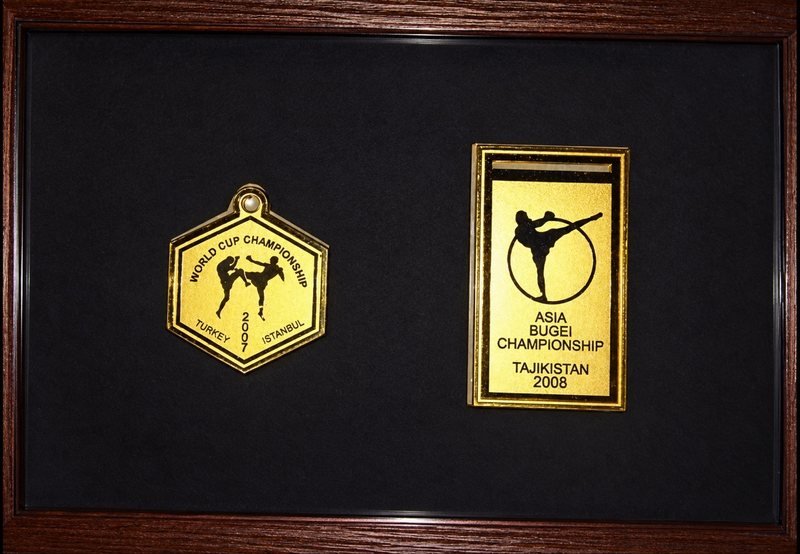
FitnessBlackBelt online coaching builds your whole week — pressing, pulling, legs and conditioning — around your equipment, schedule and injury history, with form checks on your key lifts and weekly adjustments. It is led by Mah Ghasemi, ISSA-certified coach, 2007 kickboxing world champion and 2011 MMA world champion. Start with the free 7-day trial and train your first balanced week with a coach watching the numbers.
- A complete weekly program where pulling volume matches pressing — no neglected muscle groups
- Video form checks on your rows, hinges and presses
- Progressions planned for the exact dumbbells you own
Explore coaching programs and start free with a week built in balance.
FAQ
Can you build a strong back with only dumbbells at home?
Yes. Rows, hinges, pullovers and flies with dumbbells cover every major back muscle — lats, rhomboids, traps, rear delts and spinal erectors. What limits home back training is rarely the equipment; it is skipping the session or using momentum instead of controlled reps. Progressive overload with reps, tempo and sets keeps dumbbell training productive for a long time.
How often should I do a dumbbell back workout at home?
Once a week is enough if the session is complete, as written here — 14 working sets is a solid weekly dose for a beginner. If back is your only pulling work and you recover well (no lingering lower-back fatigue after 48 hours), a second shorter session of rows and flies is fine. Most beginners progress fastest on one quality session plus balanced full-body work.
Why does my lower back get tired before my lats when I row?
Because in unsupported rows your lower back works isometrically to hold your torso angle, and it is often the weakest link in the chain. That is why this session puts the chair-supported one-arm row first, keeps the hinge third, and caps bent-over work at moderate loads. If your lower back is the limiter every week, use the seated supported regression for the bent-over row and strengthen the hinge gradually.
What weight should I start with for dumbbell rows?
Start with a dumbbell you can row for 12 clean reps with the last two feeling hard and no torso rotation — for many beginners that is 10–20 lb (5–10 kg) for rows, and about a third of that for reverse flies. Your legs and hinge will handle more than your rows, and your flies far less. When in doubt, start lighter: you can add reps this week and weight later.
Do I need a pull-up bar as well?
No. A pull-up bar is an excellent long-term addition because vertical pulling complements the horizontal pulling in this workout, but it is not required to build a strong, balanced back as a beginner. Master these six dumbbell movements and their progressions first; add vertical pulling later if you install a bar.
Sources
- American College of Sports Medicine. Progression Models in Resistance Training for Healthy Adults — position stand. Medicine & Science in Sports & Exercise, 2009.
- Schoenfeld, B.J. et al. Resistance training volume enhances muscle hypertrophy but not strength in trained men. Medicine & Science in Sports & Exercise, 2019.
- Physical Activity Guidelines for Americans, 2nd edition — muscle-strengthening activity for all major muscle groups on 2 or more days a week.